

Caring for someone with cancer: Beginners Guide
Written By Lotte May
Founder of Comfort Crate & Cancer Advocate
Discovering a loved one has cancer is overwhelming, but many people find deep personal satisfaction in caring for them. It can feel good to take action, giving you a sense of control over a difficult situation. Preparing for the tasks ahead will help you stay mentally grounded and confident in your new role.
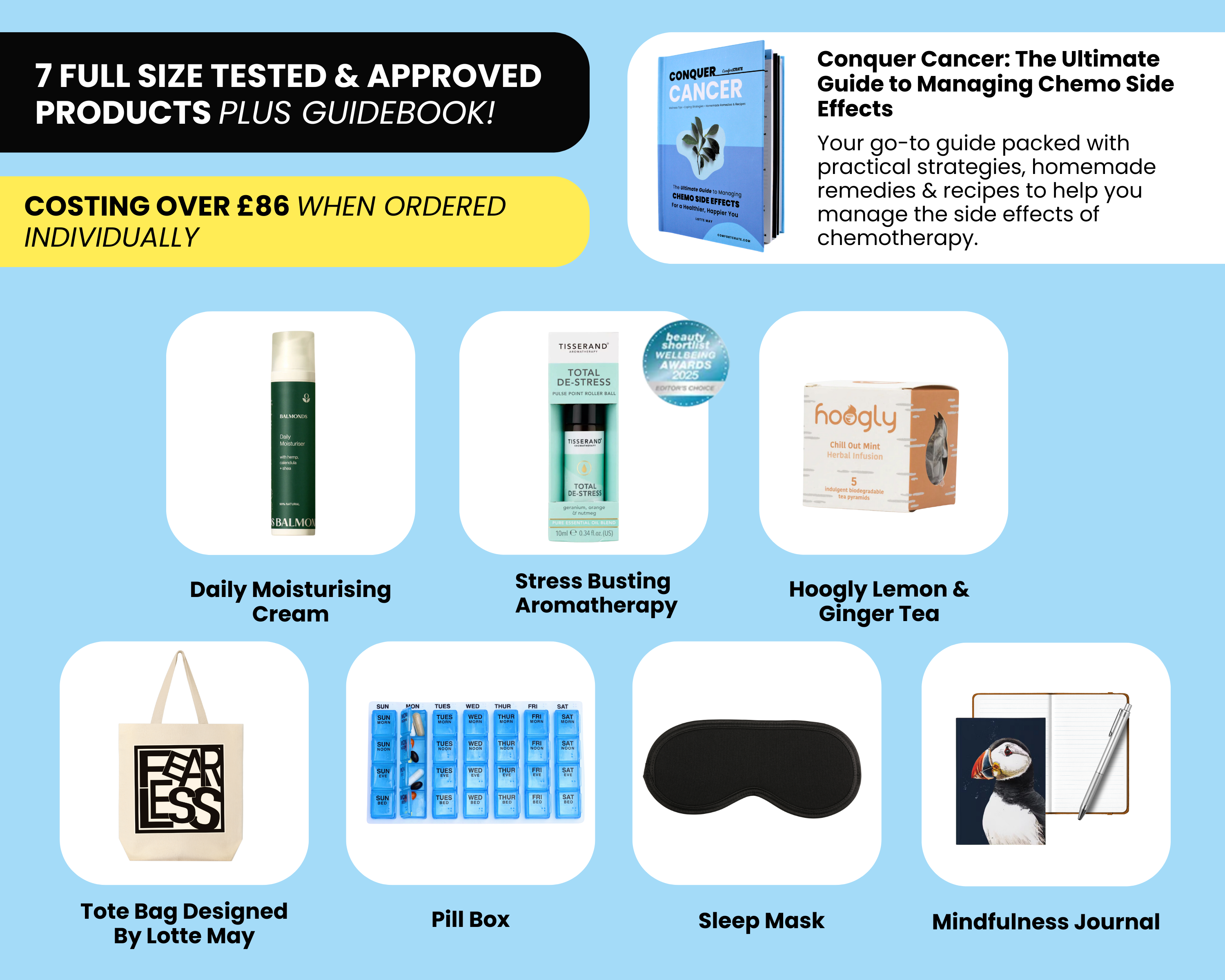
Your Caregiving Companion: The transition to caregiving is easier when you have a roadmap. Our Conquer Cancer Guidebook is designed to be the household brain." It features dedicated sections for tracking medications, scheduling appointments, and managing side effects—allowing you to spend less time worrying about logistics and more time supporting your loved one.

What Does a Caregiver Do?
A caregiver often wears many hats, ranging from medical coordinator to emotional anchor. Your tasks may include:
- The Scheduler: Attending appointments and managing complex calendars.
- The Physical Caretaker: Assisting with hygiene, medications, and physical needs.
- The Counsellor: Providing a safe space for emotional expression.
- The Household Manager: Dealing with meals, laundry, bills, and childcare.
- The Advocate: Communicating with health and social care professionals on the patient's behalf.
Essential Tips for New Caregivers
- Educate Yourself: Learn about the specific cancer and treatment side effects. Knowledge breeds confidence.
- Call a Family Meeting: Don't carry the weight alone. Split tasks between family and friends.
- Keep a Health Folder: Store all medical letters and records in one place for easy reference.
- Write Down Symptoms: Track changes in sleep, mood, or appetite to help the doctor assess treatment progress.
- Accept the Bad Days: It’s unrealistic for a patient to stay positive 24/7. Space and patience are sometimes the best gifts you can give.
- Plan Time for Yourself: Activities like exercise or finishing a personal project are essential for your own mental health.
Caregiving is rewarding, but it is not easy. It is normal to have days where you feel you’ve done well and days where you feel defeated. If the pressure becomes constant, don't hesitate to seek professional mental health support.
For more in-depth support, explore our related guides:
CAREGIVER BURNOUT: SELF CARE HELP
STRESS RELIEF: BLOG SECTION
Further Reading and Support
-
GOV.UK: Financial Support for Carers
Check if you are eligible for Carer’s Allowance or other UK financial benefits to help with the costs of caregiving. -
Working with Cancer: Support for Working Carers
A specialist UK resource helping you understand your rights at work and how to manage your career while caring for a loved one. -
Maggie's Centres: Support for Family and Friends
Maggie's provides free practical, emotional, and social support specifically for the people looking after those with cancer in the UK.
About the Author: Lotte May is a stage 4B Hodgkin Lymphoma survivor and founder of Comfort Crate. She uses her research background to provide patients and families with practical, evidence-based tools. Read more about her mission here.
Medical Disclaimer: This information is for support and guidance only. It does not replace the advice of your medical team.









Leave a comment
This site is protected by hCaptcha and the hCaptcha Privacy Policy and Terms of Service apply.