

Managing Taste and Smell Changes During Cancer Treatment: A Guide to Dysgeusia
Written By Lotte May
Founder of Comfort Crate & Cancer Advocate
Why Do Taste and Smell Changes Happen in Cancer Treatment?
Taste and smell changes—often referred to as dysgeusia—are common side effects of chemotherapy and radiotherapy. Many patients describe food tasting metallic, bitter, or completely flavourless. While the exact cause is complex, it is largely due to chemotherapy and immunotherapy affecting the rapidly dividing cells in the mouth and nasal cavity.
For those receiving radiotherapy to the head and neck, the salivary glands and taste buds may be directly impacted. While these senses typically begin to recover 3 weeks to 2 months after treatment ends, the process can continue for up to a year. In some cases, if the salivary glands are permanently affected, your sense of taste may feel different long-term.
The Science of Retronasal Olfaction
We often think of taste as being restricted to the tongue, but what we perceive as flavour is actually a combination of taste and smell. This process is called retronasal olfaction. As you chew, aromas travel from the back of your mouth up to your nasal cavity. If your sense of smell is altered by treatment, your brain cannot map the flavour correctly, leading to a loss of appetite or food aversions. Understanding this connection is the first step in finding ways to mask unpleasant tastes.
Common Factors Affecting Your Senses
Beyond the treatment itself, several other factors can contribute to sensory changes:
- Dry Mouth (Xerostomia): Lack of saliva prevents flavour molecules from reaching your taste receptors.
- Mouth Sores: Inflammation in the oral cavity can make certain textures and flavours painful.
- Dehydration: Poor hydration can lead to a more concentrated, unpleasant taste in the mouth.
- Reflux: Gastric acid backing up into the throat can create a persistent sour or bitter taste.
Practical Tips for Managing Sensory Changes
Managing taste changes is essential to maintaining proper nutrition and preventing nausea. Try these survivor-approved adjustments:
- Masking Metallic Tastes: Try sugar-free gum or hard candies in mint, lemon, or orange. Using plastic utensils instead of metal can also significantly reduce the metallic sensation.
- Aroma Control: If smells bother you, use exhaust fans while cooking, eat cold or room-temperature foods, and avoid eating in the kitchen.
- Enhance Flavours: Marinate meats in fruit juices, sweet wines, or salad dressings. Use herbs and spices liberally to punch through the dullness.
- Timing Your Meals: Avoid eating 1-2 hours before and 3 hours after chemotherapy to prevent developing long-term food aversions associated with nausea.
- Oral Hygiene: Keep your mouth clean with a gentle salt and soda rinse (1/2 tsp salt, 1/2 tsp baking soda, 1 cup warm water) before eating to neutralise acids.
Note for Oxaliplatin Patients: If you are receiving oxaliplatin, avoid cold foods and drinks entirely, as this medication causes extreme cold sensitivity (neuropathy).
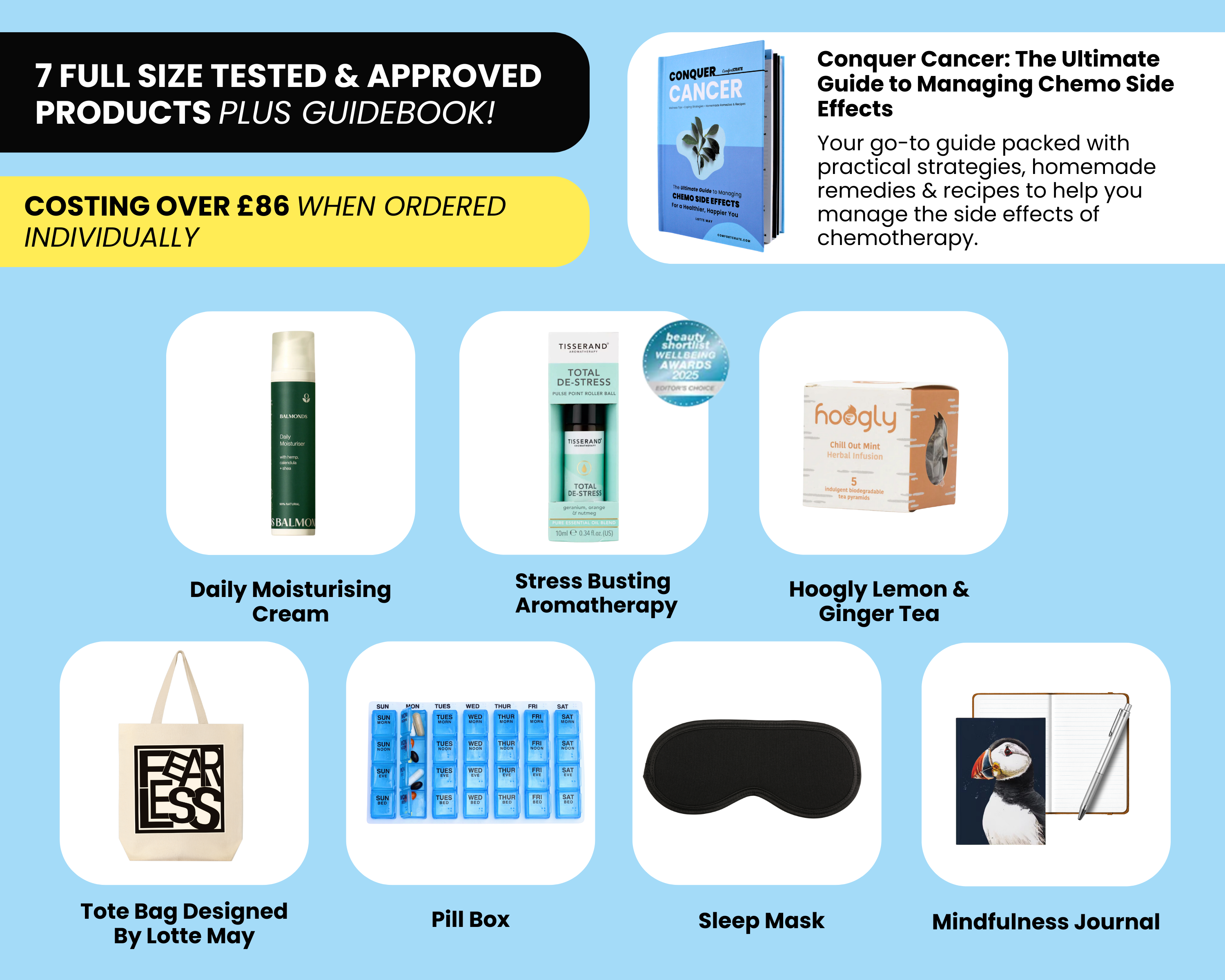
Take Control of Your Nutrition: Taste changes shouldn't stop you from getting the nutrients your body needs to heal. For more research-backed recipes and a complete guide to managing oral side effects, discover The Ultimate Guide to Managing Chemo Side Effects. This guidebook was created by a survivor to help you navigate every sensory hurdle during your recovery.

Further Reading and Support:
-
Medical News Today: How to Treat Metallic Taste
A comprehensive UK guide on how to adapt your diet and manage the emotional impact of losing your sense of taste. -
British Journal of Nursing: Tips for Taste Changes
Clinical advice on specific food substitutions and how to ensure you're maintaining a healthy weight during treatment.
About the Author: Lotte May is a Stage 4B Hodgkin Lymphoma survivor and founder of Comfort Crate. During her treatment, she experienced "tomato-paracetamol" taste changes first-hand and now uses her research background to help others navigate the complexities of cancer nutrition.
Medical Disclaimer: This information is for support and guidance only. It does not replace the advice of your medical team.









Leave a comment
This site is protected by hCaptcha and the hCaptcha Privacy Policy and Terms of Service apply.