

The importance of oral care during cancer treatment
Written By Lotte May
Founder of Comfort Crate & Cancer Advocate
Several cancer treatments, including radiotherapy and chemotherapy, can significantly impact your mouth, teeth, and salivary glands. This happens when treatment temporarily damages the mucosal lining of the throat and oral cavity. While most side effects resolve after treatment ends, proactive care is essential to prevent permanent damage or serious infection.
The Science of Oral Decontamination
Clinical research emphasises oral decontamination as a primary defence during cancer treatment. When your immune system is suppressed (neutropenia), the natural bacteria in your mouth can transition from helpful to harmful. Maintaining a strict hygiene protocol reduces the bacterial load in your oral cavity, which directly lowers your risk of developing systemic infections or severe mucositis.
Common Oral Side Effects to Monitor
Keep a daily log of any changes in your mouth. Contact your healthcare team if you notice:
- Dry Mouth (Xerostomia): A lack of saliva that makes talking or chewing difficult.
- Taste Alterations: A metallic or bitter taste in the mouth.
- Mouth Sores: Small ulcers or painful red spots on the gums or tongue.
- Jaw Stiffness: Difficulty opening the mouth fully (common in head and neck radiation).
- Tooth Decay: Increased sensitivity or new cavities due to changes in saliva acidity.
The Importance of a Pre-Treatment Dental Visit
The most effective way to prevent complications is to see a dentist at least four weeks before treatment begins. This window allows any necessary extractions or fillings to heal completely before your immune system is affected. A clean bill of dental health significantly reduces the risk of bone disease and gum infections during your journey.
Practical Tips for Daily Oral Hygiene
1. Gentle Cleaning Techniques
- Use an extra-soft toothbrush. Soak it in warm water before use to further soften the bristles.
- Brush gently twice a day. If a standard brush is too painful, try a child-sized brush or an oral cotton swab.
- Consult your nurse before flossing. If your platelet count is low, flossing can cause excessive bleeding.
- If you wear dentures, clean them thoroughly and give your gums a "break" by leaving them out for several hours a day.
2. Supportive Rinses & Nutrition
- Homemade Salt Mouthwash: Mix 1 teaspoon of salt into a cup of warm water. Rinse gently and spit. This helps neutralise acids and soothe soreness without the sting of alcohol-based rinses.
- Bone Health: Ensure you are getting enough Vitamin D and Calcium to keep your jawbone and teeth strong during treatment.
- Sugar Reduction: Lower your sugar intake. Bacteria thrive on sugar to create the acid that leads to tooth decay—a risk that is doubled when you have dry mouth.
3. Managing Mouth Sores
- Eat soft, easy-to-chew foods like scrambled eggs, applesauce, or yogurt.
- Use a blender to puree meals if swallowing becomes painful.
- Avoid thermal irritants; allow all food and drink to cool to room temperature before consuming.
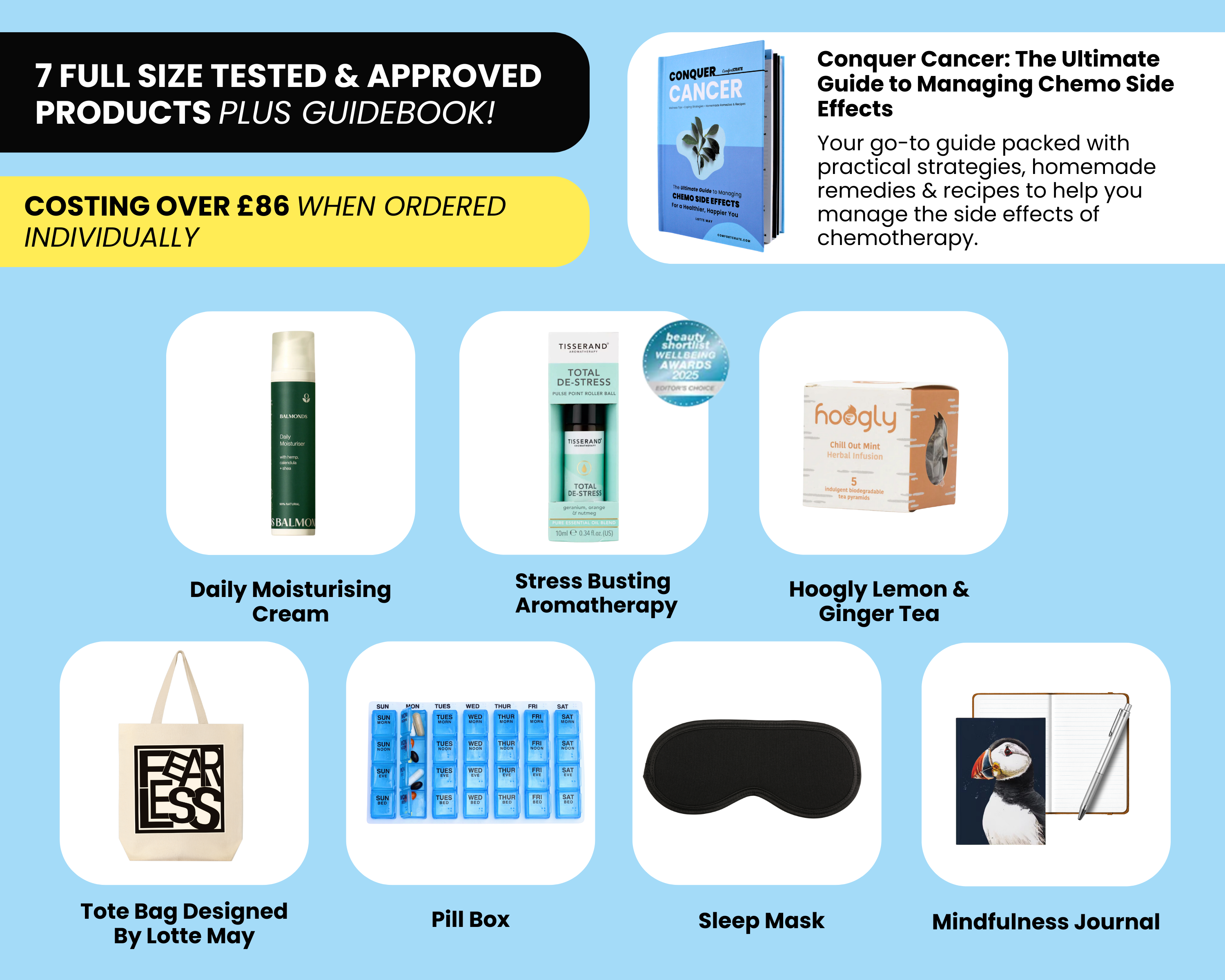
Be Prepared for Every Session: Proper oral care is just one piece of the puzzle. To ensure you have all the physical essentials for comfort and safety—from specialised oral care tools to hydration support—discover The Ultimate Chemo Kit. Curated by a survivor, this kit is designed to help you navigate side effects with confidence.

When to Contact Your Healthcare Team Immediately
Don't wait for your next appointment if you experience:
- A fever of 38°C (100.4°F) or higher.
- New white patches in the mouth (may indicate thrush).
- Bleeding gums or mouth sores that won't stop bleeding.
- Severe pain that isn't managed by your current medication.
Further Reading and Support:
-
Comfort Crate: Managing Taste and Smell Changes
Learn how to handle the "metallic" taste and food aversions that often accompany oral side effects. -
Cancer Research UK: Mouth and Teeth Side Effects
Official clinical guidance on dental health and medical treatments for oral infections. -
Oral Health Foundation: Cancer and Your Mouth
Expert advice on maintaining tooth enamel and gum health during long-term cancer therapies.
About the Author: Lotte May is a Stage 4B Hodgkin Lymphoma survivor and founder of Comfort Crate. She combines her personal survivor experience with a background in research to empower patients with practical, evidence-based health advice.
Medical Disclaimer: This information is for support and guidance only. It does not replace the advice of your medical team.









Leave a comment
This site is protected by hCaptcha and the hCaptcha Privacy Policy and Terms of Service apply.